
Karen’s new book is out March 16th.
The moving story of a woman who survived betrayal, embraced possibility, and took herself out to dinner when she felt like giving up.
Try One Bite
The moving story of a woman who survived betrayal, embraced possibility, and took herself out to dinner when she felt like giving up.
Try One Bite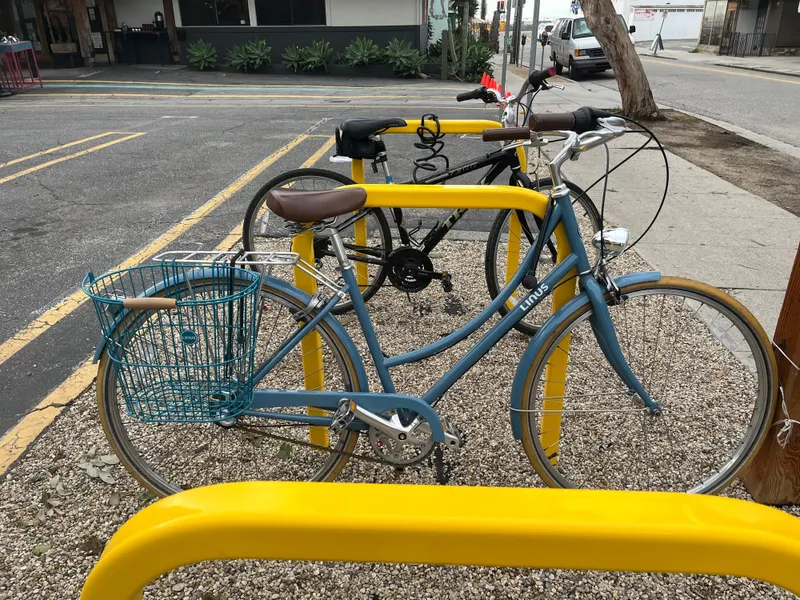


Ageism is the subtlest and sweetest all the -isms, discrimination and dismissal wrapped in a candy shell.
Read MoreThe podiatrist is a few years older than my daughter, is my guess, and I like her because she’s a foot detective, determined to find an explanation for the beat-up third toe on my left foot. Which she does: It’s the longest toe on that foot, and several times a week it gets jammed against my sneaker as I pedal my bike 5 or 7 or 10 miles. All I need are shoes a half size up and some moleskin padding. That’s her prescription. I’ll be fine.
She smiles. “It’s wonderful,” she said, “that you’re still so active.”
Still so active. Not “so active.” Not “active.” Still so active.
Silly me. I’d passed my cycling expiration date and never noticed. I am an anomaly merely by doing what I have always done.
I try to move through the marginalized world of older women with a semblance of grace, so I smiled, thanked her, and thought positive thoughts until I was in the parking lot. Then I considered how her voice had softened into a sing-song, accompanied by a pat-pat-pat on my shoulder, as she shifted from clinician to booster. She thought my diligent attempt to outdistance time on the bike path was cute. She’d code-switched to the type of voice we use with diminutive creatures who amuse and rely on us, like puppies.
She probably didn’t realize what she’d done. That’s becaus ageism is one of the subtlest and sweetest of all the isms, discrimination and dismissal wrapped in a candy shell. And it’s worse for women, who’ve spent a lifetime trying to escape our lesser gender identity — the little woman, the weaker sex — only to find ourselves treated that way again late in the game.
Some will say that this is all in my head, that I’m too sensitive, which is what people usually tell women to dodge whatever we’ve just said. I am at high risk for overreaction, I’ll give you that, because I am small and people too often assume I am less capable than they are because I can’t look at them eye to eye. I wince at the words “petite” and “tiny,” and tend to shoot back, “Not in spirit, I’m not."
A bit hair-trigger, granted — and yet not necessarily wrong. Here is a short list of things I’ve been advised not to do lately, even by people my own age:
▪ Travel to Italy alone.
▪ Rent a car to drive from Florence to Pienza, a city I have never visited, because I feel a compelling need to walk the Path of Art and Soul, see the 28 sculpted benches along its length, and consume a great deal of fresh pecorino cheese at the source.
▪ Ice skate.
▪ Ride my bicycle with no hands.
I am not incautious. I arrived at the car rental office in Florence armed with a sheaf of printed instructions and maps in case there was no English-language GPS, which of course there was. Hertz and the owner of the Airbnb would notice if I didn’t return that evening. My cellphone was fully charged.
I agreed not to skate until the orthopedist said my knee had recovered from a jarring encounter with a piece of sidewalk that gave way.
And I have guardrail rules for no-hands cycling: only on the bike path, never on crowded weekends, not if the winds are high, not if I’ve had a bad day. When the chorus of concern got too loud, I asked the knee doc for his expert opinion. If he thought it was a bad idea, I would give it up, grudgingly.
He said that riding hands-free was in fact a very good idea within the parameters I’d set. I was teaching my brain to balance, training myself to avoid the very falls that plague older people’s waking dreams. He was all for it.
Being brave is not easy — ou should’ve seen my leg tremble when I shifted that rental car into drive — but there’s an imperative at work here. The stakes are high, because in each case — the drive, the hike, the skates, the bike — the question is the same, and definitive. Am I too old to do this anymore?
And the follow-up: Says who?
I hiked for over an hour outside Pienza, got lost twice, doubled back, and finally arrived at the end of the path and the last bench — the 13-foot Guardian of the Valley, whose eternal job is to keep watch over the Val d’Orcia. Then I hiked back down, under his benevolent gaze, because I am, like I said, active.
A couple of months later I was in line at a neighborhood bakery, wearing my Columbia Journalism School baseball cap, a proud souvenir of having taught there for 10 years.
The young guy in front of me took note.
“Are you still a journalist?” he asked.
“I am,” I said.
If he had been wearing the cap, would I have said, “Are you yet a journalist?” No. That would be disrespectful.
Which brings me to a solution. Rather than assume limitations based on age, at either end of the spectrum, we could approach each other with the assumption of competence. How about, “That sounds like an adventure,” in reference to Pienza, rather than “That’s crazy,” which was one of the reactions I got. How about “How’d you learn to do that?” rather than warnings about bike accidents and broken hips.
I may be old, but I’m not stupid. There will come a day when I stop pedaling and skating and traveling alone.
It’ll come. Don’t rush me, is all I ask.
I grew up after the crinoline and before the slip dress, on propriety's waning edge.
Read MoreI grew up after the crinoline and before the slip dress, on propriety's waning edge. When I was little, I wore a dotted-swiss and organdy party dress to Passover Seder at my aunt's house, and I dutifully scanned my patent-leather shoes for nicks while I waited for the service to end. But by the time I graduated to a kilt with matching sweater and knee socks, questioning the status quo had become the politically correct attitude, and so my sister and my cousins and I perfected an array of disaffected expressions to let everyone at the table know that we had far more important things to do.
I fled to college determined never again to endure what I now considered the endless patriarchal ritual of the Seder. I majored in English lit and minored in rejecting the past: All I wanted to know was why it took Grandpa Abe more time to work through the Haggadah than God needed to part the Red Sea and Moses to march our ancestors across it.
Time passed. I wish I could say that the wisdom of years drew me back to belief and observance, but in fact it was brisket. Grandma Ethel's brisket, to be precise, cooked until the tender slices had to be hoisted on a serving spoon lest they break on the tines of a fork, and eaten with molten prunes and chunks of caramelized carrot and sweet potato, all of it coated with a mahogany syrup. Ethel was for the most part a perfunctory cook, known on the other 364 nights of the year for over-cooked vegetables and a serviceable roast chicken. Brisket with tzimmes was her one voluptuous dish, and the only part of my childhood meal that I recalled with favor, aside from the bottomless crystal pitcher of Fanta orange soda.
My preoccupation with brisket unnerved my new and nonobservant husband, Larry, since seven pounds of beef required either guests or a commitment to two weeks of cold brisket sandwiches, and I preferred the former. I tried to reassure him that this would not be a real Seder, just a dinner party with a Seder menu. Okay, we might sing "Dayenu" and rattle off the four questions, but nothing major. I wrote to Grandma Ethel for the recipe, which came down to this: Cover the brisket with water, bring it to a boil, cover the pot, and simmer for two or three hours. Add prunes, carrots, sweet potatoes, salt, and pepper, and continue to simmer. Slice and serve.
It wasn't much to go by. The first two hours were torture, for there is nothing quite so ugly as a big piece of tan meat burbling around in a pot of thin brown liquid. I threw in way too many prunes and vegetables and fretted some more.
When Larry came home from buying wine, he slumped against the front door in disbelief.
"It smells great," he said.
So it did. Ethel had failed to mention faith and patience, two essential ingredients for both a successful brisket and a successful Seder. Somewhere in the middle of hour three, the liquid had begun to turn dark and glossy, and by dinnertime we had a platter of the kind of meat that made our guests get sloppy and lick their fingers.
The following year, one of the couples called to ask if we were doing Passover dinner again-and so this spring we celebrate our 20th Seder, bound to a growing number of friends who want to spend an evening together thinking about how fortunate we are. We began with a handful of childless adults; now we are two dozen adults and ten children, the eldest of whom leaves for college next fall. Many of the guests aren't Jewish, and we work from a radically abridged prayer book. It is an invented, ecumenical ritual.
The menu is etched in stone, like commandments on a tablet, because the polite if reflexive "Can I bring something?" takes on a profound new meaning when three dozen people are coming to dinner in the middle of the workweek. About eight years ago, I handed out the most general of assignments -- please bring a vegetable, a salad, something for dessert -- to the known cooks in the crowd. After a few missteps (homemade gefilte fish is not worth the trouble), we settled on our immutable menu:
Chopped liver for the adults and matzo-ball soup for the kids.
Lots of Italian haroseth, made with chopped apples, dates, raisins, almonds, matzo meal, and, when I remember, a hard-boiled egg.
Lots of horseradish.
Grandma Ethel's brisket.
Roast chicken for the few people who won't be seduced by even great red meat.
Mountains of asparagus, green beans with a raspberry vinaigrette, and roast carrots.
Two salads-one spicy with arugula, the other a cooler dish that's heavy on the cucumbers. A table full of desserts, including fresh and dried fruit, chocolate and vanilla macaroons, and a jam-topped spongecake that nobody eats anymore but was a favorite of a guest who moved away.
It's a totem, that cake: Someone inevitably asks about the departed family when they see it, and we all stand around and reminisce.
These are not the trendiest preparations on the planet; if they were clothes they would be broken-in jeans and a sweater. But the dishes people bring to the Seder are infused with nostalgia, felt memory, and a passion for family – real, or, like our Seder crowd, concocted --that heighten our senses and make a big noisy dinner into a feast.
Nineteen years ago, Lori learned to make those green beans from the nice lady who lived across the hall from Roy, the man Lori was about to marry. A lifetime ago, Laura watched her mother make chopped liver from scratch and listened to her apologize for one of the ingredients ("Miracle Whip!"); now she makes a vat of it and continues to apologize for the source of its incredibly creamy texture. Lucy is a renowned home cook, but on this night she channels her sophistication into a perfect platter of springtime asparagus with lemon, because it makes the meal harmonious. And I answer the inevitable queries about the roast carrots, descendants of the carrots prepared by both of my grandmas, Ethel and Mattie Ann: "Just olive oil and salt on a jelly-roll pan at four hundred degrees. They get like that all by themselves."
It is the offering, not the intricacy, that counts. The first year that Carolyn joined us, she brought strawberries in a beautiful bowl that she forgot to take home. I returned it a month later, but in subsequent years she forgot to ask and I forgot to remember. Now she brings the fruit in a grocery bag, and the bowl sits out on our kitchen counter all year, waiting. It is our guarantee, our promise of another year, its presence more potent than the pledge we recite ("Next year in Israel") when what we really pray for is next year at the table again, together.
In the kingdom of the heart, where we dine with our friends once each spring, even a strawberry in a particular bowl is a magical dish. The youngest among us reminds us that this night is different from all other nights, and we nod our assent, sure that our collective, cobbled dinner is the best meal on earth. We might as well be right.
Now that I know how fond chatbots are of the em dash — the punctuation mark I just used to define a thought that intruded on but is connected to the main sentence — I have a confession to make.
Read MoreNow that I know how fond chatbots are of the em dash — the thing I just used to convey a thought that intruded on but is connected to the main sentence — I have a confession to make.
It’s in part my fault, apparently. Watch out for the semicolon, too; I sprinkle them like salt.
I’m one of those authors whose books AI ate for lunch a few years back, making us unwitting and unwilling contributors to the chatbot writing style, if you want to call it that. At some point I might get a check to pay me for a dozen years’ work on the three books it stole, but really, there’s no way to compensate for the fallout. AI seems to think — no, it can’t think, only shuffle what real people thought — that a machine can write as well as a person can. In the process of trying, it’s compromised the very tools we use.
I taught at Columbia Journalism School for 10 years, and was surprised to learn from a second-semester student that a first-semester professor had forbidden the use of the semicolon. It was sloppy, he said. Evidence of an indecisive mind. A better writer would find a more definitive way to punctuate the space between two thoughts.
He was tenured. I was an adjunct and surprised to find myself in the classroom at all, so I did what any decent writer does and succumbed to self-doubt. I write by ear — I worshipped another adjunct who insisted that all writing was musical — only to find that someone higher up the academic ladder believed I’d been doing it wrong, forever.
Then I did the other thing any decent writer does: I defended myself. Banning the semicolon seemed rather hard-line, I said. I joked about the possibility that our conflicting attitudes were gender-based. I softened my indignation with a reference to my West Coast woo-woo roots: Everything is related to everything, hence the semicolon, even though my childhood was spent in the decent and rule-bound Midwest.
I told my students that they should try what sounded right to them as long as they didn’t sacrifice clarity. There are lots of melodies out there.
But back to em dashes. I’ve just finished writing a book that’s as full of them as the other books I’ve written over 40-plus years, so I’m stymied by what to do next, because it seems my writing style now invites suspicion. I could go back through 63,000 words and change the em dashes to I don’t know what. Periods. Commas, which lose the half-beat hesitation a semicolon provides — and might splice together two independent clauses. Or colons, which are too emphatic. Or I could run a disclaimer on the title page: No AI programs were used in the creation of this book.
That, of course, puts me at greater risk. “The lady doth protest too much”: Some readers will assume that I did, in fact, collaborate with a machine.
Maybe we need a certification office whose logo would sit right above the publisher’s on a book’s spine, so that anyone who still bought books could tell at a glance if a human being consumed too much coffee and developed turtleneck in the service of storytelling. Even as I type, paranoia reaches out to tap me on the shoulder. Who’s certifying the certifiers to make sure they aren’t letting ChatGPT do the analysis?
By the way, the Copilot feature on Word, which I cannot turn off no matter what I try, just butted in to highlight “at a glance.” Readers would be better served, I’m told, if I used “briefly” or “immediately,” neither of which is exactly what I meant.
I worked with a magazine editor, in the very long ago, who seemed really to enjoy his work, particularly the part about choosing exactly the right word. We’d go through the almost-final draft, paragraph by paragraph, to address passages or even single words he felt were not quite right. I’d suggest a change or two and then surrender to insecurity, because this was early in the game for me, and I had a small case of impostor syndrome. Clearly he had the right word in mind, and whatever it was was OK with me.
His answer was always the same. This is your piece, he’d say, and I know you can come up with it. He’d repeat the point he thought I was trying to make, and I’d suggest a few more options until I hit the right one.
I’ve been grateful to him ever since, although now I hold him partly responsible for my willingness to use em dashes and semicolons.
When I found out about my Columbia colleague’s ban on semicolons, I checked a few books by favorite authors of mine and — lo and behold — found em dashes and semicolons galore and felt redeemed. Yes, I use them too often, and yes, I’ve occasionally done a punctuation reread to see if some of them are superfluous. I left all of them in this essay on purpose, so that commenters can complain about how many I use or accuse me of being a front for ChatGPT.
I’m not saying everyone needs to write without AI assistance. I’ve read about job seekers who use AI to thwart AI applicant-screening systems and am all for it, but that’s about survival tactics, not self-expression. I am saying we ought to value the human voice the way we value any other natural resource, and be wary of pretenders. But em dashes don’t prove that software wrote something. Affectless language, the lack of anything like a writer’s idiosyncratic style, is the dead giveaway that nobody’s home. Writing that’s as boring as your dullest relative was likely written by a chatbot that can’t see, hear, taste, smell, touch — or feel. Settle for that and we’re all the poorer for it.
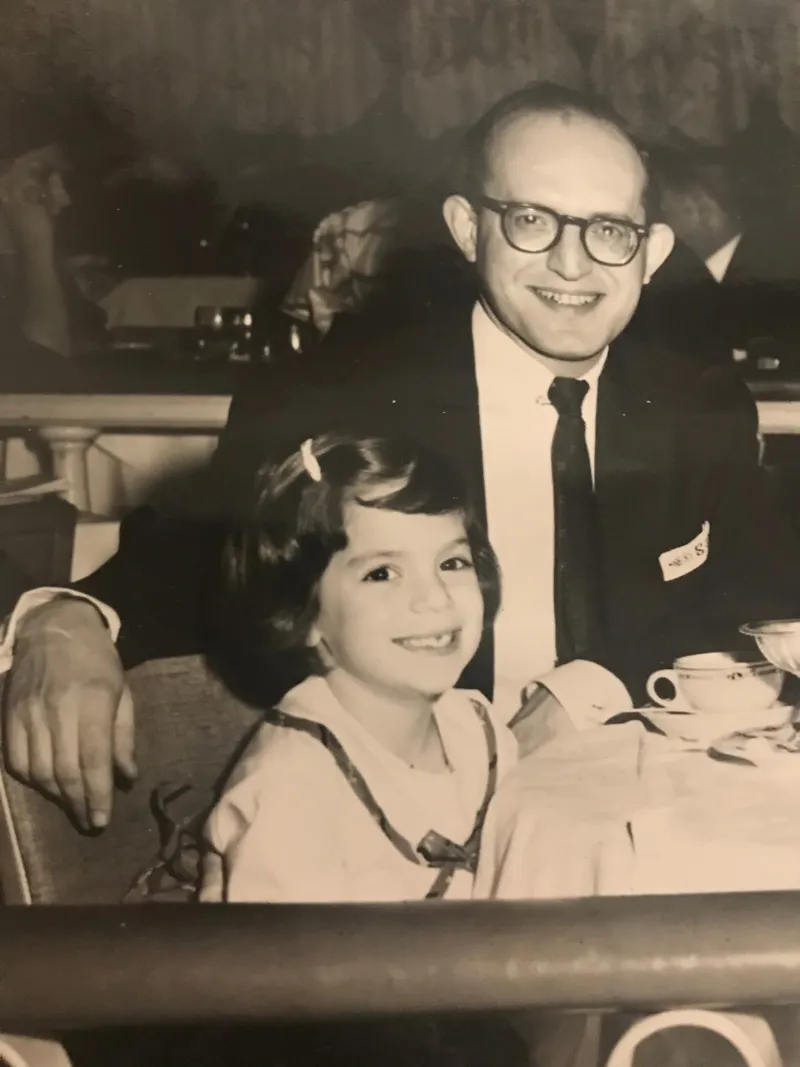
Recipe for a happy childhood: Bottomless Shirley Temples while my dad sold stockpots.

Men prefer younger women. Women over 60, you know I’m right.

To get a dog or not to get a dog, that is the question.

Tell me if you've heard this one: An influencer walks into a bar. . . . No, wait. It's no joke.


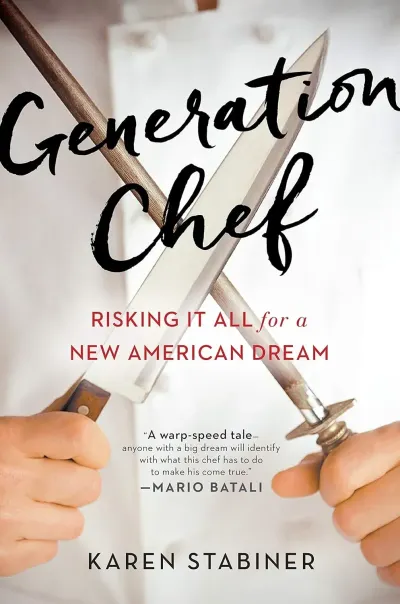
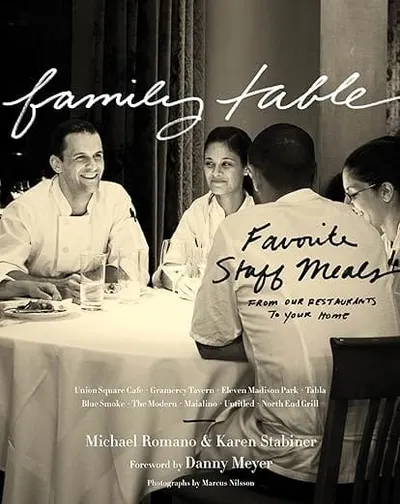
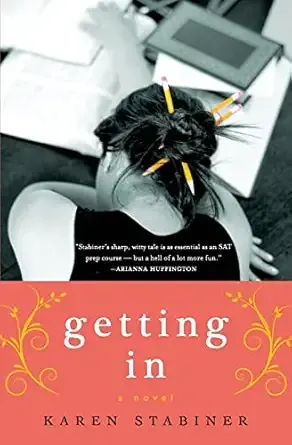
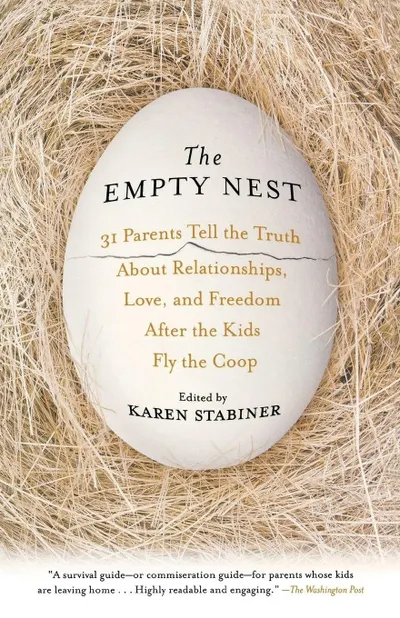
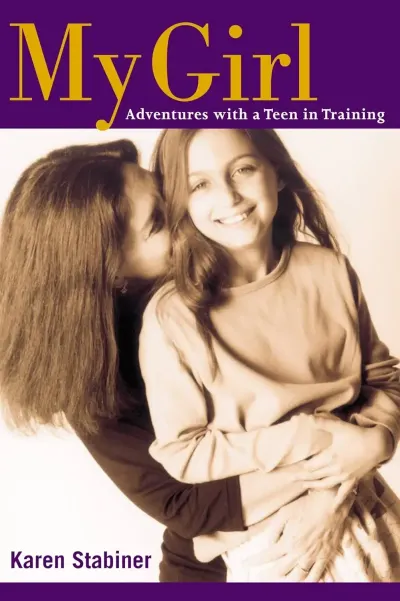
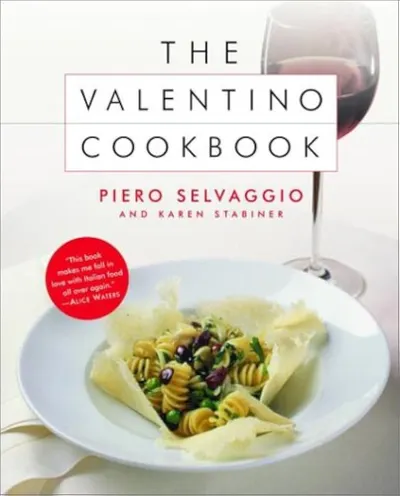
Karen Stabiner is a journalist and author whose work centers on food and community, family, and the personal turning points that shape our lives.
Her work has appeared in The Boston Globe, the Los Angeles Times, The New York Times, and other national publications, where she considers life from a deeply personal perspective – sometimes funny, sometimes indignant, always heartfelt.
About Karen



Subscribe for updates, articles, and commentary directly to your inbox.